Soil Preparation
 Fertilization
 Other Practices
Soil Preparation
Fertilization
Other Practices
Soil Preparation
Fertilization
Other Practices
Soil Preparation
Fertilization
Other Practices
Soil Preparation
Fertilization
Other Practices
Soil Preparation
Fertilization
Other Practices
Other Practices
Soil Preparation
Fertilization
Other Practices
Soil Preparation
Fertilization
Other Practices
Soil Preparation
Fertilization
Other Practices
Soil Preparation
Fertilization
Other Practices
Soil Preparation
Fertilization
Other Practices
OKRA CULTIVATION GUIDE
Soil Preparation
- Land should be ploughed 2-3 times to a depth of 20-25 cm to improve tilth.
- Remove clods, stubbles, and weeds completely.
- Okra prefers loose, well-drained, and fertile soil.
Seed Treatment
- Treat seeds with Ziram 0.3% for 30 minutes to prevent fungal diseases.
- Soak okra seeds in water overnight before sowing for better germination.
Fertilization
- Apply FYM or compost @ 25 t/ha with NPK fertilizers as basal dose.
- Top dressing every 10-15 days using cow dung slurry or vermiwash.
- Spray micronutrients like 19:19:19 and 13:00:45 during fruit development.
Irrigation
- Pre-sowing irrigation if soil moisture is low.
- Water every 5-8 days in spring-summer and 10-12 days in winter.
Plant Protection
- Control Fusarium wilt with crop rotation and summer ploughing.
- Spray Dimethoate 0.03% at 15 and 30 days to control Yellow Mosaic Virus.
- Manage red spider mite using recommended insecticides.
Other Practices
- Mulch the field to conserve moisture and suppress weeds.
- Earth up the base of plants during rains to provide support.
- Maintain spacing of 45-50 cm between rows and 10-15 cm between plants.
- Seed rate: 18-22 kg/ha for spring-summer; 8-10 kg/ha for rainy season.

Healthy Soil, The Secret to Successful Okra Farming!
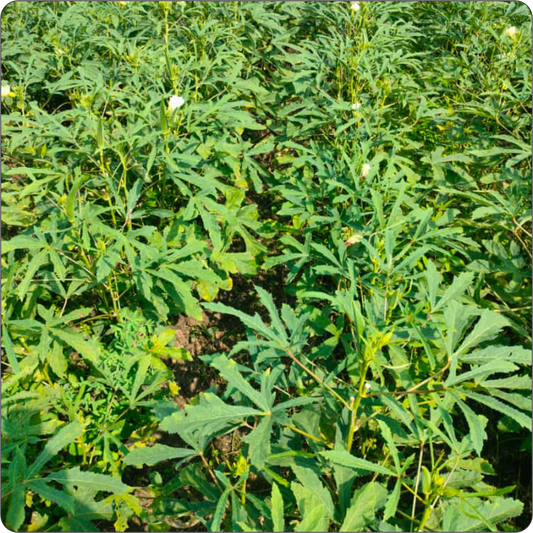
Okra, also known as ladyfinger or bhindi, is a highly nutritious vegetable that thrives in warm climates. It is rich in vitamins A, C, and K, as well as essential minerals like calcium and magnesium. Okra is known for its high fiber content, which aids in digestion and promotes heart health. Cultivating okra with healthy soil is crucial for achieving high yields and ensuring the plant's health.
Okra plants require well-drained soil with a pH level of 6.5 to 7.5. Regular irrigation, proper fertilization, and protection from pests and diseases are vital for successful okra farming. With the right techniques and healthy soil, okra farming can lead to bountiful harvests, providing fresh, nutritious produce for the market or your kitchen garden.
Okra – 100 grams
Deals of the Day
₹490
Sagar Biotech Maruti Okra
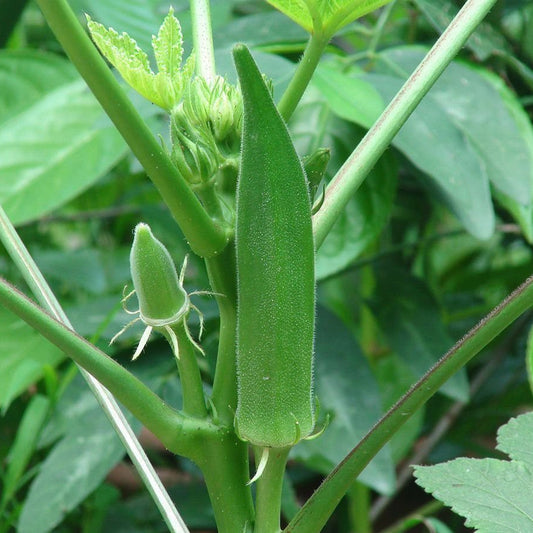
Sagar Biotech Maruti Okra is a high-yielding hybrid variety known for its uniform, tender, and dark green fruits. It is ideal for cultivation across different seasons and adapts well to various soil types. This variety ensures excellent shelf life and marketability, making it a favorite among commercial farmers and kitchen gardeners alike.
Best Benefits Of Our Hybrid Okra Seeds
Explore the power of hybrid okra seeds designed for high yield, early maturity, and strong disease resistance. Enjoy healthier crops with superior pod quality, ideal for diverse climates and modern farming needs.
Higher Yields
Hybrid okra plants produce more fruits per plant, ensuring a significantly higher harvest.
Early Maturity
Enjoy quicker harvests as hybrid varieties mature faster than traditional types.
Disease Resistance
Engineered to resist common threats like Yellow Mosaic Virus, reducing crop loss.

Improved Fruit Quality
Get dark green, shiny, and tender pods with smooth texture for better market value.
Compact Growth
Ideal for limited space—hybrids often feature short internodes and compact plants.
Adaptable to Conditions
Grows well in various climates and soil types, making it suitable for all seasons.
What Farmers Say About Our Okra Seeds

I've seen a remarkable increase in my okra yield since I switched to these hybrid seeds. The plants are stronger, and the fruits are of better quality. Highly recommended!

The disease resistance in these hybrid seeds has saved me so much hassle. My crops are healthier, and the yield is incredible. I’m definitely sticking with these!

After planting these okra seeds, I noticed faster maturity and a better market price for my produce. I’m very satisfied with the results!